WELCOME TO
THE ATLANTIC CURRENT
Welcome to The Atlantic Current – your go-to source for smart AV tips, behind-the-scenes insight, industry news, and inspiration. Whether you're planning your next project or just curious about the latest in AV tech, we’ve got you covered.
Stay in the know — sign up for our newsletter and catch the Current as it flows!
08/24/26
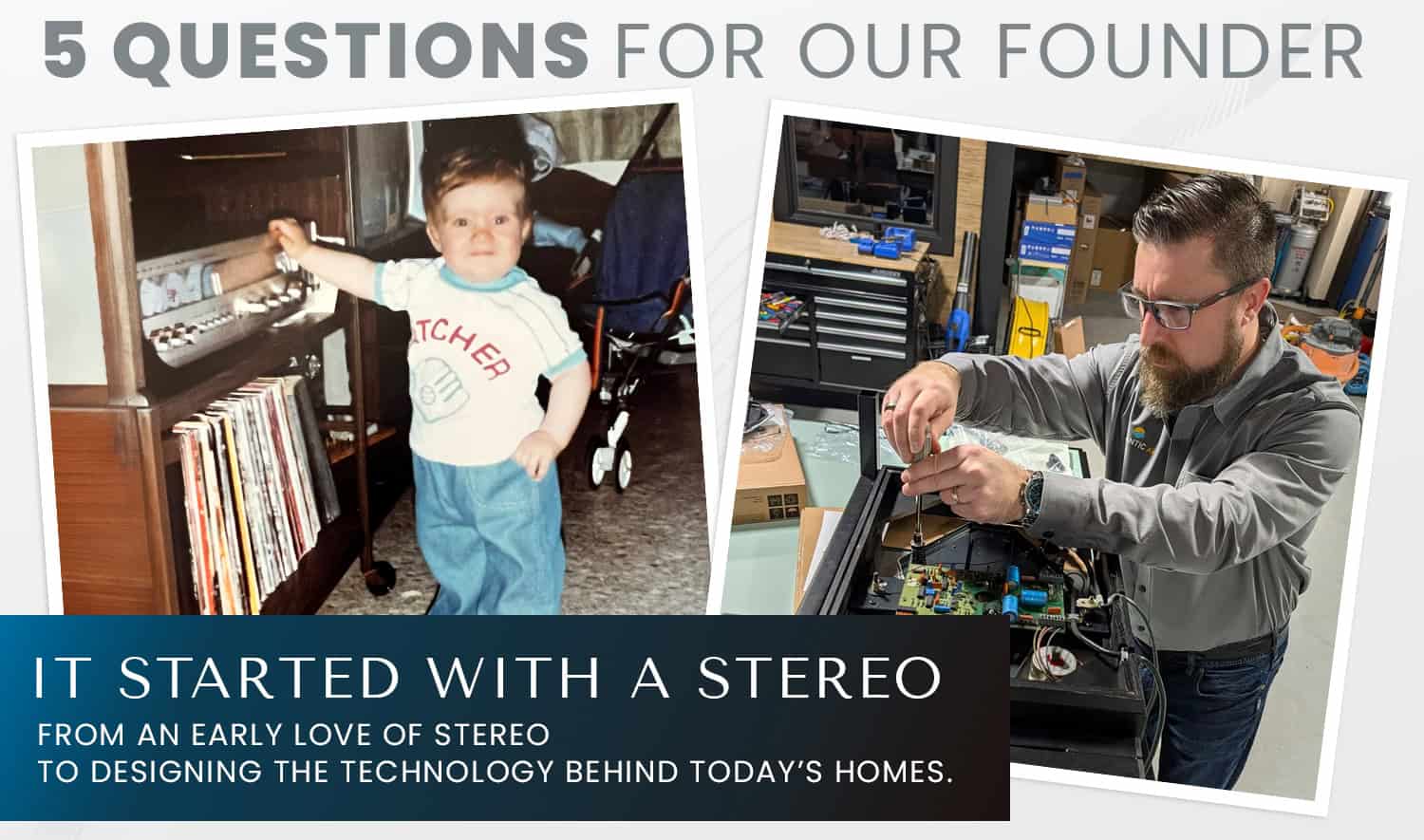
HOW LONG HAVE YOU BEEN IN THE AV INDUSTRY, AND WHAT FIRST DREW YOU TO IT?
I STARTED IN THE AV INDUSTRY IN 2002, SO I’VE BEEN DOING THIS FOR MORE THAN 24 YEARS NOW.
What originally drew me to it was a combination of my interest in technology and my passion for music and audio. At the time, I don’t think I could have imagined how much the industry would change or where it would take me.
What started primarily with audio and video has evolved into networking, lighting, shades, automation, security, outdoor technology, and essentially every piece of technology that goes into a modern home. That constant evolution is one of the things that has kept me interested and excited about the industry all these years. There is always something new to learn and something new coming around the corner.
WHAT’S THE BIGGEST CHANGE YOU’VE SEEN IN HOME OR COMMERCIAL AV TECHNOLOGY SINCE YOU STARTED?
WITHOUT QUESTION, NETWORKING.
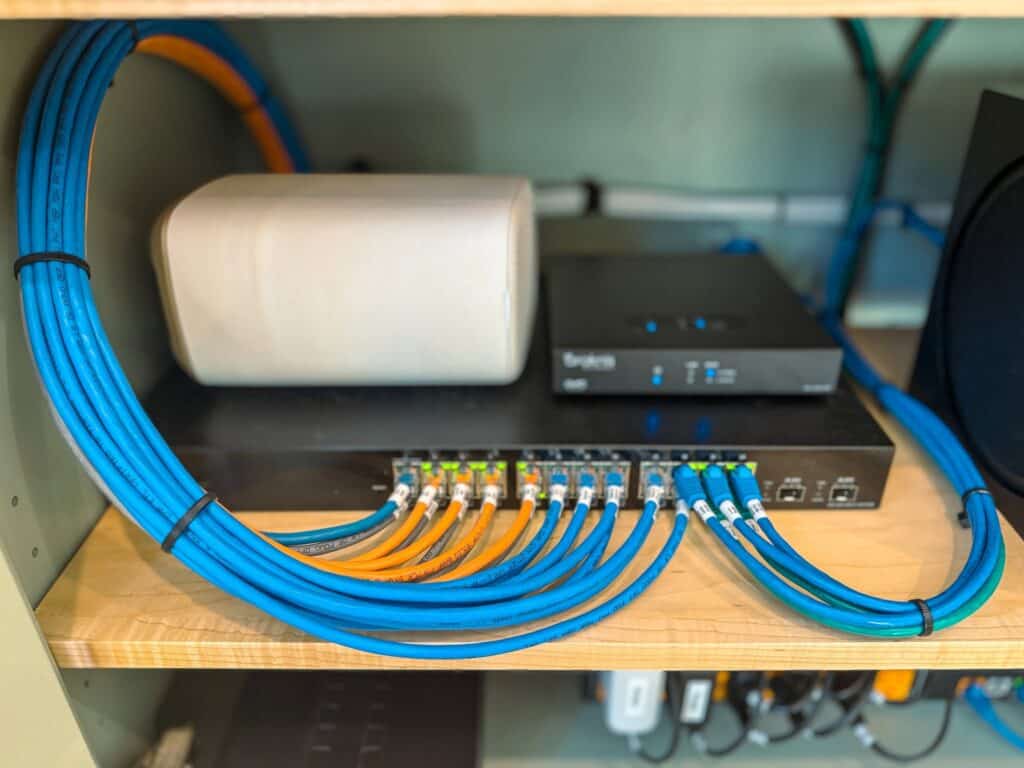
When I started in 2002, the network was a very small part of what we did. Today, it’s really the backbone of almost everything we install. TVs, music, lighting, control systems, surveillance, thermostats, appliances—you name it, and there’s a good chance it’s connected to the network in some way.
Because of that, designing a solid network has become just as important as selecting the AV equipment itself. You can have the best equipment in the world, but if the infrastructure supporting it isn’t reliable, the overall experience isn’t going to be reliable either.
The other major change has been how attainable smart-home technology has become. What was once something you would only see in extremely high-end homes is now available at many different levels. The technology has become better, more reliable, and much more accessible to the average homeowner.
WHAT’S ONE PIECE OF ADVICE YOU’D GIVE SOMEONE BUILDING THEIR FIRST SMART HOME SETUP?
HARDWIRE EVERYTHING YOU REASONABLY CAN, AND PLAN FOR WHAT YOU DON’T KNOW YOU’RE GOING TO NEED YET.


Wireless technology is great and certainly has its place, but there is still no substitute for a properly designed wired infrastructure. If you’re building or renovating, take advantage of the opportunity while the walls are open. Run network wiring to TVs, wireless access points, cameras, control locations, and other key areas.
I’m also a huge believer in running conduit to strategic locations throughout the home. We know the technology we’re using today, but none of us knows exactly what will be available 10 or 20 years from now.
The wire you install today may eventually become obsolete, but a conduit gives you a pathway for whatever comes next. It’s one of the least expensive things you can do during construction and potentially one of the most valuable later. We always try to think beyond the system we’re installing today and consider how we’re going to make that home easier to upgrade in the future.
WHAT’S A COMMON MISCONCEPTION CUSTOMERS HAVE ABOUT AV SYSTEMS THAT YOU’D LIKE TO CLEAR UP?
THAT A SOPHISTICATED AV OR SMART-HOME SYSTEM HAS TO BE COMPLICATED TO USE.
In reality, it should be exactly the opposite. If a system is designed and programmed properly, the technology behind it can be incredibly complex while the experience for the homeowner remains incredibly simple.
Where we sometimes run into problems is when key pieces are removed from a design in an effort to reduce the initial cost. A universal remote or control system might look like an optional expense on a proposal, for example, but it may be the very thing that ties everything together and makes the system easy to operate.
Historically, the client who decides they don’t need that piece is often the same client who later tells us, “The system isn’t easy to use.”
That’s why we put a lot of thought into our recommendations. We aren’t just thinking about whether all the equipment will work—we’re thinking about what it will be like for someone to actually live with and use the system every day.
Ultimately, great technology shouldn’t feel complicated. The complexity should happen behind the scenes so the experience for the person using it is simple.
WHERE DO YOU SEE THE AV INDUSTRY HEADING IN THE NEXT 3–5 YEARS?
AI IS GOING TO BE THE HUGE PIVOT, AND I THINK WE’RE ALREADY IN THE MIDDLE OF IT.
For years, home automation has largely been based on commands: press a button, open an app, or say a specific phrase and something happens. AI has the potential to fundamentally change that relationship.
When you combine AI with increasingly sophisticated voice control, the home can begin to understand context, preferences, routines, and what you’re actually trying to accomplish rather than simply responding to individual commands.
I think we’re moving toward homes that are much more intuitive. Instead of homeowners constantly telling the technology what to do, the technology will increasingly understand what they want and adapt around them.
One company we believe very strongly in for this is Josh.ai. One of the biggest reasons is privacy. Josh.ai was designed specifically for the home and with a privacy-first philosophy. We believe that becomes increasingly important as AI and voice control become more integrated into our everyday lives.
There’s a big difference between having AI in your home that exists to make your home better and having a voice assistant connected to a larger ecosystem whose business model may include advertising, shopping, or using data to personalize other services.
Personally, I’m not comfortable with that tradeoff. I tried some of the major consumer voice platforms in my own home, and they lasted about two weeks before I took them out. I simply didn’t like the idea of bringing that kind of ecosystem into the private conversations and day-to-day life of our home.
That experience is a big part of why I believe so strongly in Josh.ai’s approach. If AI is going to become more deeply integrated into our homes—and I absolutely believe it will—privacy can’t be an afterthought. The technology needs to work for the homeowner, not turn the homeowner into the product.
To me, that’s one of the most exciting changes we’ve seen in a long time. We’ve talked about the “smart home” for decades, but the combination of AI, natural voice control, and a privacy-first approach may finally be what allows the home to become truly smart.